Automation and Robotics
Logistics Insights & Trends
Automation & Robotics in Logistics: Building the Autonomous Supply Chain
Executive Summary
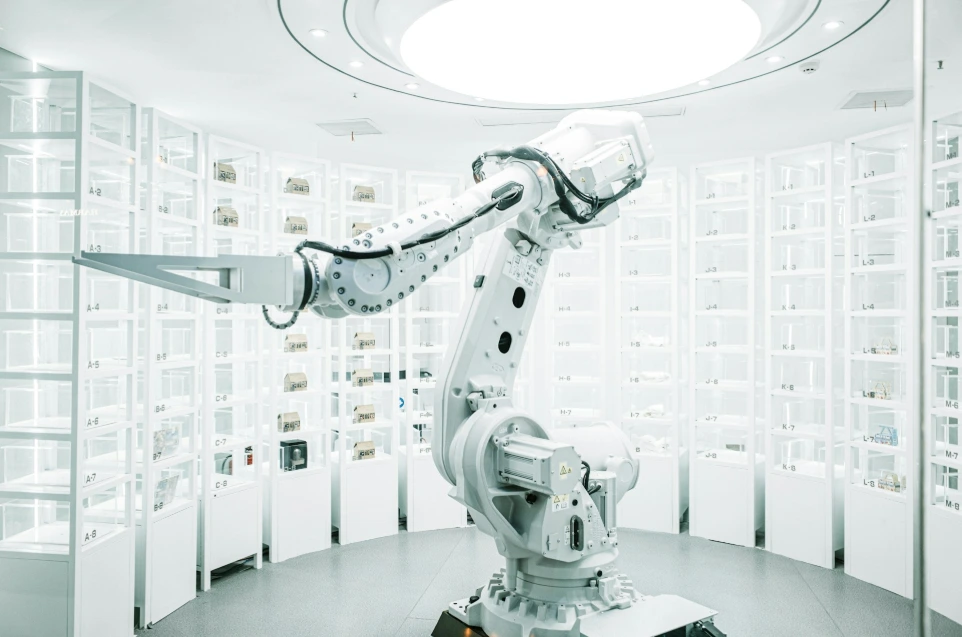
Automation and robotics are reshaping logistics operations worldwide. Faced with labor shortages, increasing customer expectations, growing e-commerce volumes and pressure to improve efficiency, logistics organizations are accelerating investments in automated warehouses, autonomous vehicles, robotics and intelligent material-handling systems. Automation is no longer limited to large distribution centers; it is increasingly being adopted across warehouses, transport operations, air cargo facilities and fulfillment networks. AI, robotics and digital technologies are now considered key enablers of supply chain resilience, productivity and sustainability. [wns.com], [virtualworkforce.ai], [aircargonews.net]
Why Automation Matters
Today's logistics environment faces several challenges:
- Rising operational costs
- Labor shortages
- Increasing order complexity
- Faster delivery expectations
- Supply chain disruptions
- Sustainability requirements
Automation helps address these challenges by reducing dependence on manual processes while increasing speed, accuracy and scalability. The OECD identifies automation and AI as critical technologies for improving supply chain efficiency, resilience and competitiveness. [wns.com], [dih.lu]
Key Benefits
✅ Improved productivity
✅ Reduced operating costs
✅ Higher accuracy
✅ Enhanced workplace safety
✅ Greater scalability
✅ Better customer service
✅ Increased resilience
1. Warehouse Automation
Warehouse automation remains the fastest-growing area of logistics transformation.
Modern warehouses increasingly deploy technologies that automate receiving, storage, picking, packing and shipping activities.
Core Technologies
Automated Storage and Retrieval Systems (AS/RS)
AS/RS solutions use cranes, shuttles and robotic systems to store and retrieve inventory automatically.
Benefits
- Higher storage density
- Faster retrieval
- Improved inventory accuracy
- Better space utilization
These systems are particularly valuable in high-throughput distribution centers and pharmaceutical logistics environments.
Conveyor & Sortation Systems
Automated conveyors and sorters move products throughout facilities with minimal manual intervention.
Applications include:
- Parcel sorting
- E-commerce fulfillment
- Air cargo handling
- Distribution centers
Business Impact
- Faster order processing
- Reduced labor costs
- Higher throughput capacity
2. Autonomous Mobile Robots (AMRs)
Autonomous Mobile Robots are becoming a cornerstone of Logistics 4.0.
Unlike traditional fixed automation systems, AMRs navigate dynamically using sensors, cameras and AI algorithms. They can move inventory, transport goods and assist warehouse operators without requiring fixed infrastructure. Automation and robotics are increasingly linked with AI and data-driven logistics innovation. [aircargonews.net], [wns.com]
Key Applications
- Goods-to-person picking
- Inventory transportation
- Replenishment
- Cross-docking operations
- Inventory counting
Benefits
✅ Faster order fulfilment
✅ Reduced walking distances
✅ Improved labor productivity
✅ Flexible deployment
3. Robotic Picking Systems
One of the most challenging warehouse tasks has traditionally been order picking.
Advances in robotics, computer vision and AI have significantly improved robotic picking capabilities.
Technologies Used
- Machine vision
- AI image recognition
- Robotic arms
- Gripping technologies
- Deep learning algorithms
Modern systems can identify, pick and place items with increasing accuracy and speed.
Use Cases
- E-commerce fulfillment
- Retail distribution
- Pharmaceutical logistics
- Spare parts logistics
Automation helps improve consistency while reducing picking errors and operational bottlenecks.
4. Computer Vision in Logistics
Computer vision combines AI and cameras to automate visual inspection and operational monitoring.
Applications
Inventory Monitoring
Automated systems can:
- Count stock
- Detect discrepancies
- Monitor inventory movements
Quality Control
Computer vision can identify:
- Damaged products
- Packaging issues
- Loading errors
Safety Management
Systems can monitor:
- Pedestrian traffic
- Equipment interactions
- Compliance with safety procedures
Computer vision is becoming an important component of intelligent warehouse ecosystems. [wns.com], [weforum.org]
5. Autonomous Transport & Smart Mobility
Automation is increasingly extending beyond warehouses into transportation operations.
Emerging Technologies
Autonomous Trucks
Although large-scale deployment remains gradual, autonomous driving technologies continue to mature.
Potential benefits include:
- Reduced driver shortages
- Increased utilization
- Enhanced safety
- Optimized fuel consumption
Yard Automation
Many logistics facilities are adopting automated yard management systems that coordinate trailer movements and gate operations.
Benefits
- Reduced congestion
- Faster turnaround times
- Better asset utilization
These developments align closely with OECD and EU priorities around smart mobility and digitalized transport systems. [shipstage.com], [gouvernement.lu]
6. Air Cargo Automation
For logistics hubs such as Luxembourg, air cargo automation represents a major opportunity.
Key Areas
Automated Cargo Handling
Systems automate:
- ULD handling
- Cargo transfer
- Freight sorting
Digital Documentation
Automation reduces manual documentation processes and improves shipment visibility.
AI-Assisted Planning
Advanced systems support:
- Capacity planning
- Resource scheduling
- Cargo prioritization
Air cargo operators increasingly combine automation and AI to improve speed, reliability and operational efficiency.
7. Robotics and Sustainability
Automation is no longer focused solely on efficiency.
Increasingly, robotics contributes to sustainability goals through:
Reduced Energy Consumption
Smart systems optimize:
- Equipment utilization
- Warehouse lighting
- Temperature management
Reduced Waste
Automation minimizes:
- Inventory errors
- Product damage
- Rework activities
Improved Transport Efficiency
AI-powered automation supports:
- Better route selection
- Load optimization
- Lower fuel consumption
These outcomes support both business performance and ESG objectives. [gouvernement.lu], [wns.com]
8. Automation + Digital Twins
One of the most promising developments is the convergence of automation, robotics and Digital Twins.
Digital Twins create virtual representations of warehouses, logistics hubs and supply chain networks.
Benefits
Organizations can:
- Simulate warehouse layouts
- Test robotic workflows
- Analyze bottlenecks
- Optimize operations before implementation
LIST identifies Digital Twins as a major innovation area with direct applications in logistics, mobility and industrial operations. [gartner.com], [supplychai...igital.com]
Key Challenges
Despite rapid progress, organizations must address several implementation challenges.
Workforce Transformation
Automation changes job roles rather than simply replacing workers.
Growing demand exists for:
- Robotics technicians
- Automation engineers
- Data analysts
- AI specialists
- Digital logistics managers
Integration Complexity
Automation systems must integrate with:
- WMS
- TMS
- ERP systems
- AI platforms
- IoT devices
Investment Costs
Large automation projects require significant upfront investment, although numerous Luxembourg and EU funding programmes can support implementation.
What It Means for Luxembourg
Luxembourg is particularly well positioned for automation and robotics adoption due to:
- Advanced logistics infrastructure
- Strong air cargo sector
- Digital transformation strategy
- University of Luxembourg expertise
- LIST innovation capabilities
- Luxembourg AI Factory support ecosystem
Research activities in logistics engineering, supply chain innovation, AI and Digital Twins create strong foundations for next-generation automation projects. [virtualworkforce.ai], [gartner.com], [weforum.org], [stattimes.com]
Highest Potential Areas
- Pharmaceutical logistics
- Air cargo handling
- Smart warehousing
- Multimodal logistics hubs
- E-commerce fulfillment
- Logistics control towers
Future Outlook
Over the next five years, logistics automation is expected to evolve toward:
Autonomous Warehouses
Facilities with minimal manual intervention supported by robotics, AI and computer vision.
Human-Robot Collaboration
Cobots (collaborative robots) working alongside employees to improve productivity and safety.
Intelligent Fulfillment
AI-driven orchestration of warehouse and transport operations.
Self-Optimizing Supply Chains
Networks capable of automatically adapting to disruption, demand fluctuations and operational constraints.
Fully Connected Logistics Ecosystems
Integration of robotics, AI, Digital Twins and real-time visibility platforms across end-to-end supply chains. [wns.com], [aircargonews.net], [guichet.public.lu]
Key Takeaway
Automation and robotics are becoming the physical engine of Logistics 4.0. Organizations that successfully combine robotics, AI, automation, computer vision and Digital Twins will be able to operate faster, safer, more sustainably and with far greater resilience. For Luxembourg's logistics sector, automation represents a strategic opportunity to strengthen competitiveness and position the country as a leading smart logistics hub in Europe.