A. Company & Market Outlook
Looking ahead, what major trends do you believe will shape the industry over the next three
to five years?
Several major trends will structure the industry:
- Accelerating decarbonization : regulatory pressure (CSRD, ESG) and customer requirements.
- Optimization of energy costs : with volatile fuels, improving energy performance will remain a priority.
- Increased digitalization : collection and use of data to improve fleet performance.
- Supply chain resilience : Geographic diversification to mitigate risks related to conflict or crises.
- Hybridization of energy solutions : gradual transition between optimized thermal energy, alternative fuels and electrification.
Companies that combine technology, operational efficiency, and strategic agility will have a decisive advantage.
Are there any market developments that you feel are still underestimated or overlooked by the industry?
Yes, I think that the improvement of the existing system is still underestimated.
Many players are focusing exclusively on new engines or electrification, which is obviously essential in the long term. But the reality on the ground is that the majority of the world's fleets will continue to run on diesel or gas for many years to come.
Optimising combustion, immediately reducing emissions and consumption on existing equipment is a fast, cost-effective and measurable lever.
This pragmatic approach improving today rather than waiting for a full transition is often overlooked, even though it delivers immediate environmental and financial gains.
B. Company Strategy & Future Development
What are the strategic priorities your company is focusing on right now?
Our strategy is based on a fundamental principle: diversification as a lever for resilience.
We are actively pursuing our development in new countries and in different business sectors so that we are not dependent on a single market. In a context marked by successive crises – health, energy and geopolitical – this approach allows us to limit risk exposure and maintain stable growth.
The development of new regional partners is also a priority. Being close to the field allows us to accelerate deployments and respond quickly to the specific needs of our customers.
Can you share one initiative or investment that you believe will significantly influence your company’s future?
Every year, we reinvest a significant part of our profit in R&D and innovation. This choice is strategic: continuous innovation is at the heart of our model.
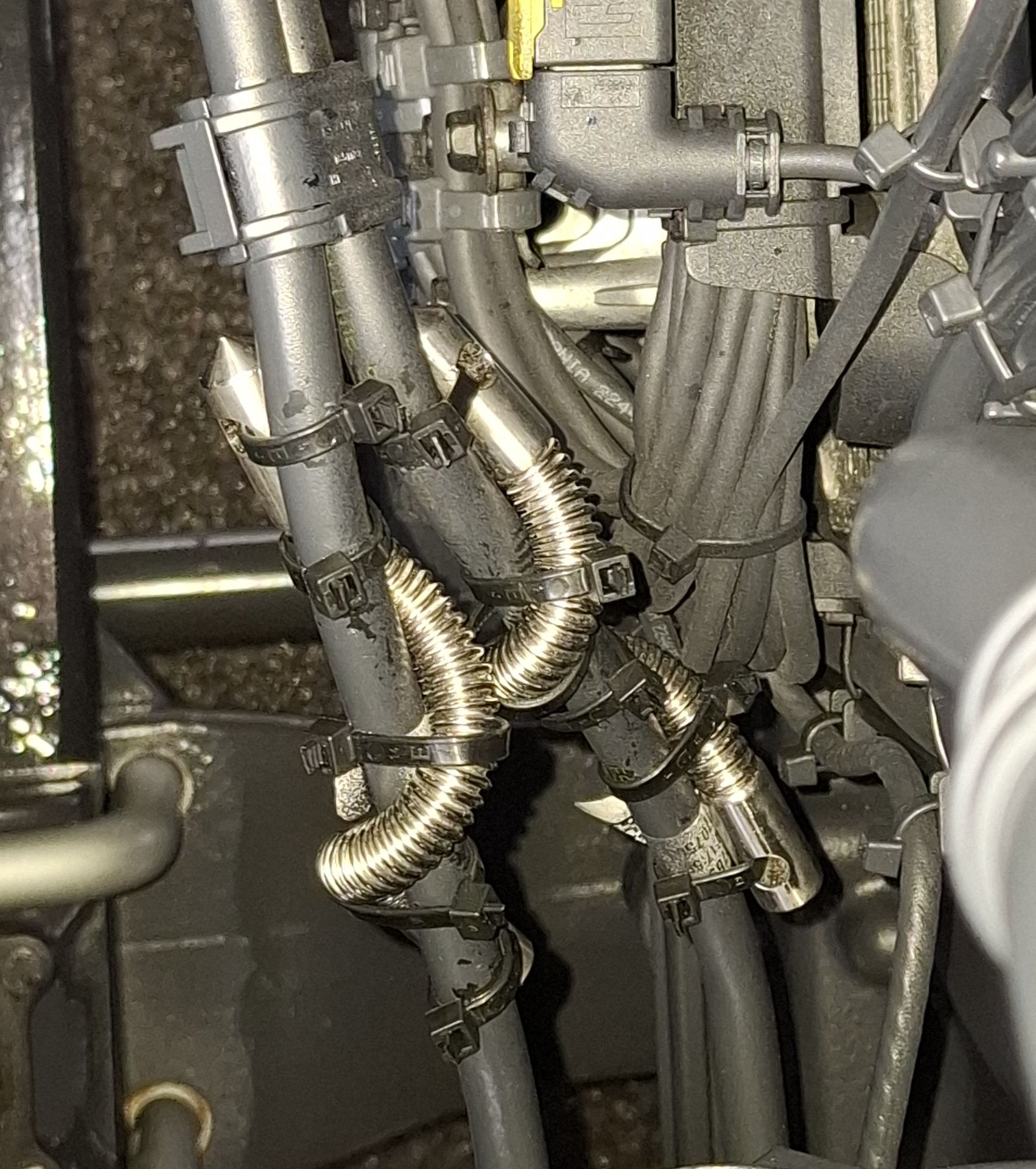
The evolution of our E-CLEAN'FUEL system is a concrete illustration of this. Initially intrusive, it required significant technical intervention on the vehicles. Thanks to several years of R&D, we have managed to develop a non-intrusive version that is more efficient and much easier to deploy.
This technological repositioning has changed the perception of the market. As a result, in the first year after this development, the product's turnover increased by 340%.
This demonstrates that sustained investment in innovation creates not only a technological advantage, but also a decisive business advantage.
C. Innovation, Digitalization & Technology
How do you ensure that innovation translates into real value for customers and employees?
All our products are developed according to the needs expressed by our customers. They are then developed and tested with them for a period of about 12 months.
If the market research confirms a wider potential, the product is standardized and integrated into our range. Otherwise, it becomes a specific product, tailor-made for a specific customer.
This approach ensures that innovation always meets a real and measurable need.
D. Sustainability & ESG, CSRD & Lean & Green
What concrete steps are you taking to reduce emissions or improve resource efficiency?
Sustainability is not a secondary focus for us: it is integrated both into our offer and into our own organisation.
Our technology is entirely developed and produced in Luxembourg. From R&D to storage, our entire value chain is concentrated within a radius of 50 kilometers. This short circuit significantly reduces our carbon footprint and strengthens operational efficiency thanks to direct proximity to our partners.
We also encourage responsible logistics practices, including favouring standard shipments over express deliveries, where possible.
E. Workforce, Skills & Leadership
From a leadership perspective, what principles guide you in navigating uncertainty and rapid change?
In an unstable environment, resilience is no coincidence. It is being built.
Our presence on several continents and in different sectors allows us to absorb shocks. When one market slows down, others continue to grow. This diversification is our primary risk management tool.
We favor a long-term vision, while maintaining great operational agility. Anticipating cycles rather than being subjected to them is essential.
F. Collaboration & Ecosystem Development
How important are partnerships whether with clusters, startups, or research institutions for your company’s innovation and growth?
Clusters and partnerships play a key role. They allow companies to connect with each other that, without this structure, would probably never have collaborated either because they don't know each other or because they don't have the right contacts.
I see these ecosystems as a real lever for growth and exchange. They facilitate cooperation, intelligent outsourcing and strategic mutual aid.
By surrounding yourself with the right skills, you can grow sustainably, as we have done, for example, with 2.0 e-Fulfillment and Cross-dock Services and just now with KUEHNE & NAGEL.
G. Customer Expectations & Service Evolution
How have customer expectations changed in recent years, and how are you adapting to them?
We have seen a very clear evolution in recent years.
In 2019, the discussions focused mainly on reducing fuel costs. The environmental dimension remained secondary.
Today, the first point of contact is often the CSR department, with a clear priority: decarbonisation.
Of course, we integrate the financial aspect, guaranteeing a return on investment of less than one year. Environmental performance and economic performance are no longer opposites, they are complementary.
H. Future Opportunities & Vision
Where do you see the biggest growth opportunities for your company in the coming years?
The biggest opportunities are clearly in improving combustion.
We help carriers reduce the carbon footprint of their fleets while lowering their fuel costs. But the opportunities are not limited to transport: our system can also be installed on industrial boilers.
This opens up important prospects in the industrial sector.
What excites you most about the future of your company and the industry?
What excites me most is our ability to continuously offer concrete solutions to companies.
Being able to combine technological innovation, economic performance and positive environmental impact is a strong motivation. The industry is changing rapidly, and this creates a considerable field of opportunity for those who dare to innovate.