Decarbonisation
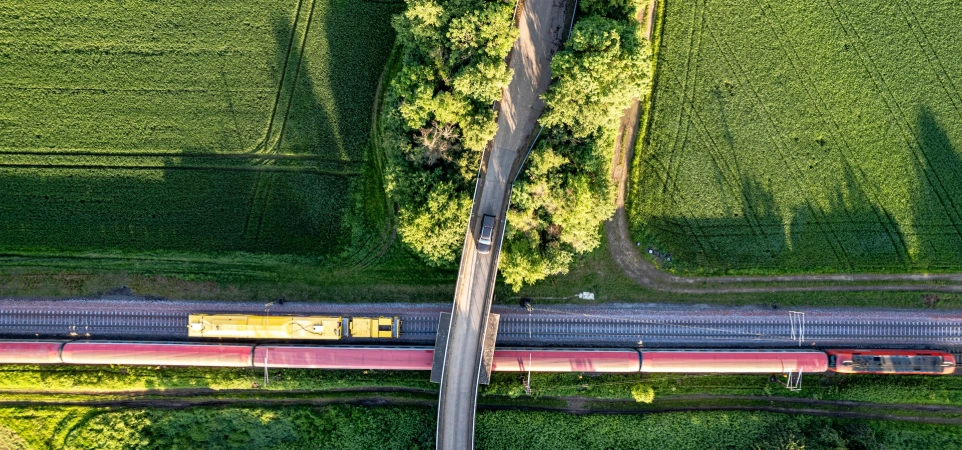
Decarbonisation in Luxembourg:
Driving the Transition Towards Sustainable Logistics and a Net-Zero Economy
Introduction
Decarbonisation has become one of the defining challenges and opportunities for Luxembourg's economy. As a highly interconnected European hub for logistics, finance, industry and international trade, the Grand Duchy has committed itself to reducing greenhouse gas emissions while maintaining economic competitiveness and ensuring sustainable growth. Luxembourg's decarbonisation journey is not merely an environmental obligation
—it is a strategic transformation that will shape the future of businesses, supply chains and mobility. [gouvernement.lu], [europarl.europa.eu]
For the logistics sector in particular, decarbonisation represents both a responsibility and a competitive advantage. Companies that successfully reduce emissions can improve operational efficiency, respond to growing customer expectations, and align with evolving European regulations and sustainability standards. [gouvernement.lu], [klima-agence.lu]
Luxembourg's Climate Ambitions
Luxembourg has established some of the most ambitious climate targets within the European Union. Through its Integrated National Energy and Climate Plan (PNEC – Energie- a Klimaplang fir Lëtzebuerg) and its Climate Law, the country has committed to:
- Reducing greenhouse gas emissions by 55% by 2030 compared with 2005 levels.
- Increasing the share of renewable energy significantly.
- Improving energy efficiency across all sectors.
- Achieving climate neutrality by 2050 at the latest. [gouvernement.lu], [environnem....public.lu], [europarl.europa.eu]
To reach these objectives, Luxembourg has defined a comprehensive set of measures spanning transport, buildings, industry, energy production, agriculture and waste management. More than 200 climate and energy measures have been integrated into the national strategy. [environnem....public.lu], [gouvernement.lu]
Why Decarbonisation Matters for Luxembourg
Luxembourg's economic model depends heavily on international connectivity. The country serves as a central European logistics gateway, linking markets through road, rail, air and multimodal transport solutions. Consequently, transportation remains one of the largest contributors to national greenhouse gas emissions. [klima-agence.lu], [klima.lu]
Decarbonisation is therefore essential to:
- Strengthen long-term economic resilience.
- Reduce dependence on fossil fuels.
- Enhance energy security.
- Improve air quality and public health.
- Maintain Luxembourg's attractiveness as an international business location.
- Meet increasingly stringent European sustainability requirements. [gouvernement.lu], [europarl.europa.eu]
For businesses, reducing carbon emissions is no longer only an environmental consideration. Investors, customers and regulators increasingly demand transparency regarding carbon footprints and sustainability performance. Companies that act proactively are better positioned to secure contracts, attract talent and access sustainable financing opportunities.
The Transport and Logistics Challenge
Transport is at the heart of Luxembourg's decarbonisation strategy. The sector accounts for a substantial share of national emissions and therefore offers significant reduction potential. Luxembourg's climate framework sets specific emission-reduction objectives for transport, with the sector expected to achieve substantial reductions by 2030 compared to 2005 levels. [klima.lu], [klima-agence.lu]
Key decarbonisation levers for logistics include:
Electrification of Fleets
The transition towards electric vehicles (EVs) is accelerating across Europe. Luxembourg supports this development through incentives, charging infrastructure deployment and policies encouraging vehicle electrification. Electrification is becoming particularly viable for urban distribution, last-mile logistics and regional transport operations. [environnem....public.lu], [klima-agence.lu]
Alternative Fuels
For heavy-duty transport where full electrification remains challenging, alternative fuels such as renewable hydrogen, biofuels and sustainable synthetic fuels are expected to play an important role. Luxembourg's national hydrogen strategy aims to facilitate the emergence of a hydrogen ecosystem supporting industry and transport decarbonisation. [environnem....public.lu], [commission.europa.eu]
Modal Shift and Intermodality
A key decarbonisation pathway is shifting freight from road to lower-carbon alternatives such as rail and multimodal transport. Luxembourg's strategic location and logistics infrastructure provide favourable conditions for strengthening intermodal solutions and reducing carbon intensity across supply chains. [gouvernement.lu], [commission.europa.eu]
Digitalisation and Efficiency
Advanced route planning, vehicle utilisation optimisation, digital freight management and supply chain visibility solutions can significantly reduce emissions while improving operational performance. Decarbonisation and digitalisation increasingly go hand in hand within modern logistics ecosystems.
Renewable Energy and Energy Transition
Decarbonisation cannot be achieved without transforming the energy system. Luxembourg is increasing investments in:
- Solar photovoltaic installations.
- Wind energy projects.
- Heat pump deployment.
- Energy-efficient buildings.
- Smart energy management systems. [gouvernement.lu], [klima-agence.lu]
The country's energy transition seeks not only to replace fossil fuels with renewable energy but also to improve overall energy efficiency. Businesses are encouraged to reduce energy consumption, optimise processes and participate actively in the transition towards cleaner energy sources. [environnem....public.lu], [commission.europa.eu]
The Role of Businesses
Businesses have a central role to play in Luxembourg's decarbonisation efforts. Across all sectors, organisations can contribute by:
- Measuring and reporting greenhouse gas emissions.
- Establishing science-based reduction targets.
- Increasing energy efficiency.
- Investing in renewable energy.
- Decarbonising corporate mobility.
- Engaging suppliers on sustainability performance.
- Adopting circular economy principles. [gouvernement.lu], [europarl.europa.eu]
For logistics companies specifically, carbon accounting and emissions reporting are becoming increasingly important due to customer demands and evolving European sustainability regulations. Transparent measurement is often the first step towards meaningful emissions reduction.
Opportunities for the Luxembourg Logistics Ecosystem
Decarbonisation should not be viewed solely as a compliance requirement. It creates substantial opportunities for innovation, collaboration and economic growth.
Luxembourg's logistics ecosystem is uniquely positioned to become a European leader in sustainable supply chains through:
- Green logistics solutions.
- Carbon-neutral warehousing.
- Renewable energy integration.
- Sustainable aviation initiatives.
- Hydrogen and alternative fuel projects.
- Smart mobility technologies.
- Collaborative logistics platforms. [environnem....public.lu], [commission.europa.eu]
The transition towards low-carbon logistics will also generate demand for new skills, technologies and business models, fostering innovation and strengthening Luxembourg's position as an international logistics hub.
Looking Ahead
Decarbonisation is a long-term transformation that requires cooperation between government, businesses, research institutions and civil society. Luxembourg has established a clear roadmap through its Climate Law and National Energy and Climate Plan, providing a framework for achieving climate neutrality by 2050. [gouvernement.lu], [europarl.europa.eu]
For the logistics sector, the challenge is significant, but so is the opportunity. Companies that embrace innovation, invest in sustainable technologies and collaborate across the value chain will not only contribute to national climate objectives but also strengthen their competitiveness in an increasingly sustainability-driven global economy.
Knowledge Hub Takeaway
Decarbonisation is no longer a future ambition
—it is a business imperative. Luxembourg's commitment to climate neutrality offers the logistics sector a unique opportunity to lead the transition towards greener, smarter and more resilient supply chains that create value for both business and society.