Key Logistics Trends for Luxembourg Businesses
Logistics Insights & Trends
Key Logistics Trends for Luxembourg Businesses
Executive Summary
Luxembourg's logistics sector is undergoing rapid transformation, driven by digitalization, sustainability, resilience, automation and changing global trade patterns. As one of Europe's most important multimodal logistics hubs, Luxembourg is uniquely positioned to benefit from emerging technologies and evolving supply chain strategies. The country's strength in air cargo, pharmaceutical logistics, multimodal transport, innovation and digital infrastructure provides significant opportunities for businesses willing to adapt.
Over the next decade, five major forces are expected to shape the logistics landscape:
- Artificial Intelligence and data-driven logistics
- Automation and robotics
- Sustainability and decarbonization
- Supply chain resilience
- Digital logistics ecosystems and connectivity
1. AI-Powered Logistics Will Become Mainstream
Artificial Intelligence is rapidly moving from pilot projects to operational deployment across logistics activities. Companies are increasingly using AI to improve:
- Demand forecasting
- Route optimization
- Inventory planning
- Warehouse operations
- Predictive maintenance
- Supply chain visibility
The European Commission continues to prioritize AI deployment and digital innovation through Horizon Europe, Digital Europe and AI-focused initiatives, while Luxembourg's AI ecosystem is expanding through the Luxembourg AI Factory and related digital transformation programs.
What This Means for Luxembourg
Businesses that successfully adopt AI will benefit from:
✅ Lower operating costs
✅ Better decision-making
✅ Increased resilience
✅ Improved customer service
✅ Higher productivity
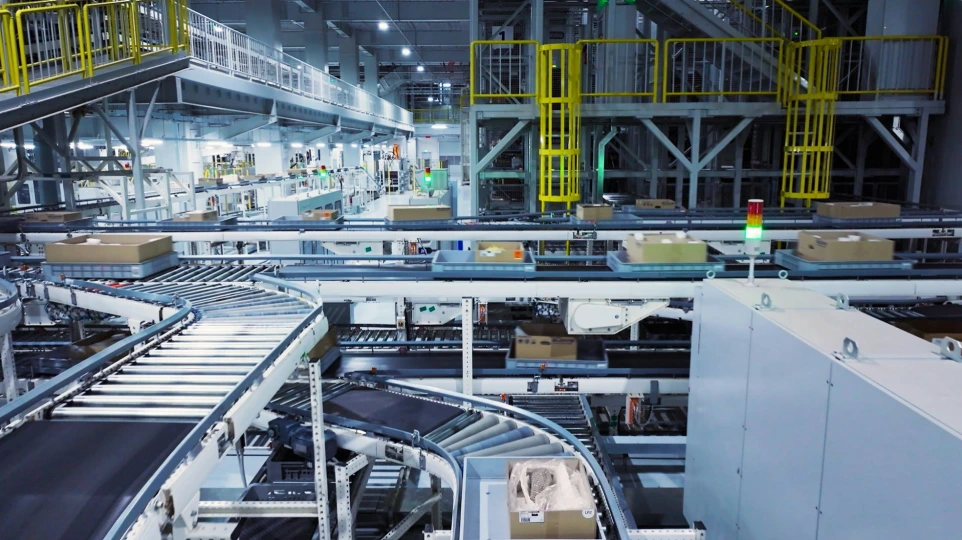
2. Smart Warehouses & Robotics Will Accelerate
Warehouse automation is becoming one of the most attractive investment areas for logistics companies.
Technologies gaining traction include:
- Autonomous Mobile Robots (AMRs)
- Automated Storage & Retrieval Systems (AS/RS)
- Computer vision
- Robotic picking solutions
- AI-enabled warehouse management
European innovation programs continue to support robotics, industrial automation and digital warehousing initiatives.
Luxembourg Opportunity
High-value sectors such as:
- Air cargo
- Pharmaceutical logistics
- E-commerce fulfillment
- Temperature-controlled logistics
are particularly well suited to advanced warehouse automation.
3. Sustainability Will Become a Competitive Differentiator
Sustainability is moving from compliance to strategy.
Customers increasingly request:
- Carbon reporting
- ESG performance indicators
- Sustainable transport solutions
- Green warehouse certifications
At the same time, European climate policies and funding schemes are encouraging businesses to invest in low-carbon operations.
Key Sustainability Trends
Fleet Electrification
Growing adoption of:
- Electric delivery vehicles
- Electric handling equipment
- Charging infrastructure
Green Warehousing
Investment in:
- Solar energy
- Smart energy management
- Battery storage
- Energy-efficient buildings
Sustainable Aviation
Increasing use of:
- Sustainable Aviation Fuel (SAF)
- Electrified ground operations
- Optimized cargo handling
4. Supply Chain Resilience Will Remain a Strategic Priority
Recent global disruptions have demonstrated the importance of resilient supply chains.
Organizations are increasingly investing in:
- Risk monitoring
- Scenario planning
- Supply chain control towers
- Alternative sourcing strategies
- Digital visibility platforms
The OECD and European institutions continue to emphasize resilience as a key component of future supply chain competitiveness.
Emerging Practices
✅ Early warning systems
✅ Predictive analytics
✅ Digital Twins
✅ Supply chain mapping
✅ Real-time visibility
5. Digital Twins Will Support Strategic Decision-Making
Digital Twin technology is becoming increasingly relevant for:
- Warehouses
- Cargo terminals
- Logistics parks
- Transport networks
- Entire supply chains
Luxembourg's research ecosystem, particularly LIST, has established expertise in Digital Twin technologies and smart mobility applications.
Business Benefits
- Simulate operational changes
- Optimize infrastructure investments
- Improve capacity planning
- Test resilience scenarios
- Reduce implementation risk
6. Air Cargo Will Continue to Evolve
Air cargo remains one of Luxembourg's strongest competitive advantages.
Future growth will increasingly focus on:
- Pharmaceutical logistics
- Digital cargo platforms
- Cargo automation
- Sustainable aviation
- AI-powered operations
European aviation policy and innovation investments continue to support digitalization and decarbonization across air freight operations.
Strategic Growth Areas
Pharma Logistics
Increasing demand for:
- GDP-compliant facilities
- Temperature-controlled transport
- End-to-end traceability
Smart Cargo Hubs
Combining:
- AI
- Automation
- Predictive analytics
- Real-time visibility
7. Multimodal Logistics Will Gain Importance
Luxembourg's location offers a natural advantage for multimodal logistics.
Businesses are increasingly exploring combinations of:
- Rail
- Road
- Air freight
to reduce emissions, improve flexibility and strengthen resilience. The EU continues to promote multimodal transport and modal shift through TEN-T and CEF investments.
Benefits
✅ Lower carbon footprint
✅ Improved resilience
✅ Better corridor connectivity
✅ Reduced transport costs
8. Data Visibility & Control Towers Will Expand
Modern supply chains increasingly depend on visibility.
The next generation of logistics operations will leverage:
- Real-time shipment tracking
- Predictive risk alerts
- Integrated planning platforms
- Supply chain control towers
These solutions provide end-to-end transparency while supporting faster and more accurate decision-making.
Expected Outcome
Organizations move from:
Reactive Logistics → Predictive Logistics → Autonomous Logistics
9. Workforce Transformation Will Accelerate
Technology does not eliminate the need for talent
—it changes the skills required.
Future logistics professionals will need expertise in:
- AI and analytics
- Automation systems
- Digital platforms
- Sustainability reporting
- Data interpretation
The House of Training and Luxembourg's broader training ecosystem are increasingly addressing these needs through logistics, supply chain and digital transformation programmes.
10. Funding Opportunities Will Drive Innovation
A major advantage for Luxembourg businesses is access to strong funding ecosystems.
National Funding
- RDI Funding
- Fit 4 Digital
- Fit 4 AI
- Environmental Aid
- AI Factory initiatives
European Funding
- Horizon Europe
- Digital Europe
- Interreg
- Connecting Europe Facility
- Innovation Fund
These instruments can significantly reduce the financial risk of innovation and transformation projects.
Top 10 Trends for Luxembourg Logistics (2026–2030)
| Trend | Business Impact |
|---|---|
| Artificial Intelligence | Very High |
| Warehouse Automation | Very High |
| Sustainability & ESG | Very High |
| Supply Chain Resilience | Very High |
| Digital Twins | High |
| Air Cargo Digitalization | High |
| Multimodal Logistics | High |
| Predictive Analytics | High |
| Logistics Control Towers | High |
| Blockchain & Traceability | Medium to High |
Executive Outlook
By 2030, Luxembourg's logistics leaders are likely to be organizations that successfully combine:
- AI-driven decision-making
- Automation and robotics
- Sustainable operations
- Multimodal transport
- Supply chain resilience
- Digital Twins and predictive analytics
These technologies and business models will help companies become more efficient, more sustainable and more resilient while strengthening Luxembourg's position as one of Europe's leading smart logistics hubs.