Multimodal Transport
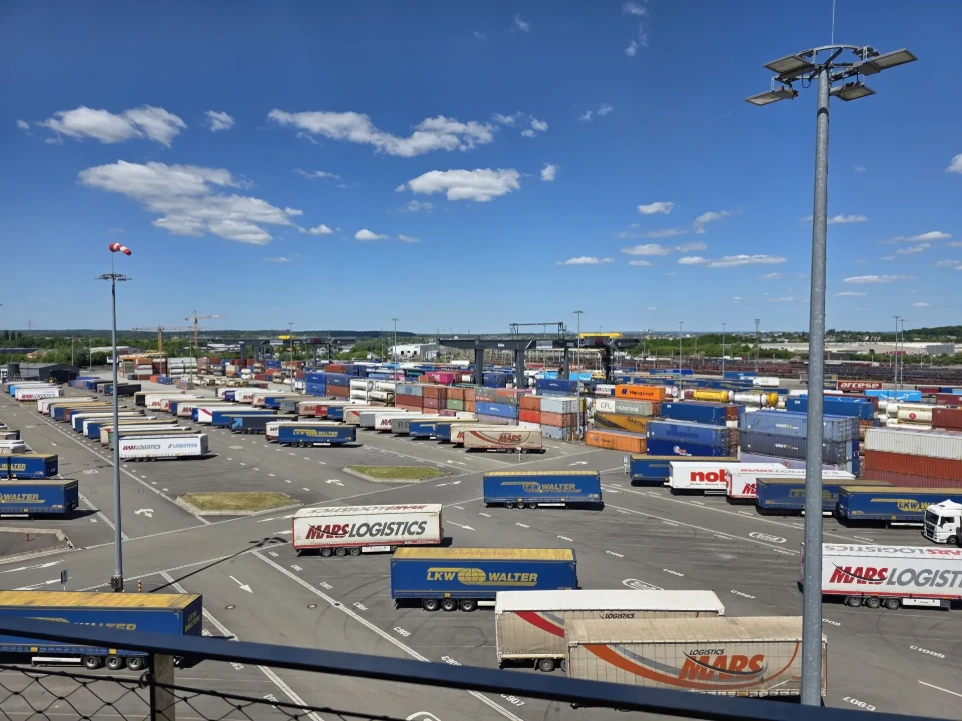
Understanding Multimodal Transport
What is Multimodal Transport?
Imagine a shipment of electronics being transported from a factory in China to a customer in Luxembourg. The goods travel by truck from the factory to a seaport, by vessel across the ocean, by rail through Europe, and finally by truck to the customer's location.
Although multiple transportation modes are involved, the entire journey is managed under a single transport contract and coordinated as one seamless shipment. This is known as Multimodal Transport.
Multimodal Transport is the movement of goods using two or more different modes of transportation (such as road, rail, sea, or air) under a single contract and managed by one operator or logistics provider.
Its primary objective is to optimize cost, speed, reliability, sustainability, and efficiency across the supply chain.
"Multimodal transport combines the strengths of different transportation modes to create a more efficient and integrated logistics network."
The Role of Multimodal Transport in the Supply Chain
Modern supply chains are increasingly global and require flexible transportation networks.
Multimodal transport enables organizations to:
Connect Global Markets
Facilitates international trade by linking production sites, ports, distribution centers, and customers.
Improve Transportation Efficiency
Utilizes the most suitable transportation mode for each leg of the journey.
Enable End-to-End Logistics
Provides a seamless transportation solution from origin to destination.
Support Sustainable Logistics
Reduces environmental impact by combining greener transport modes such as rail and ocean freight.
Improve Supply Chain Agility
Allows businesses to respond more effectively to changing customer and market demands.
Common Transportation Modes Used
Road Transport
Typically used for:
- First-mile pickup
- Last-mile delivery
- Regional transportation
Advantages
✅ Flexibility
✅ Door-to-door service
✅ Fast regional deliveries
Rail Transport
Typically used for:
- Long-distance inland transportation
- Bulk shipments
- Intermodal freight services
Advantages
✅ Cost efficiency
✅ Lower emissions
✅ High carrying capacity
Ocean Freight
Typically used for:
- International trade
- Containerized shipments
- Large-volume cargo
Advantages
✅ Low transport cost
✅ Global reach
✅ Large shipment capacity
Air Freight
Typically used for:
- Urgent shipments
- High-value products
- Time-sensitive cargo
Advantages
✅ Fastest transit time
✅ High reliability
✅ Global connectivity
Example of a Multimodal Journey
Consider a shipment moving from Shanghai to Luxembourg:
- Truck transports the container from the factory to the port.
- Ocean vessel transports the container to a European port.
- Rail moves the shipment to an inland logistics hub.
- Truck performs the final delivery to the customer.
The customer experiences one coordinated transportation process despite the involvement of multiple transport modes.
Why is Multimodal Transport Important?
Multimodal transport has become a critical component of modern logistics strategies.
✅ Reduces Transportation Costs
Combining transportation modes often provides the most economical solution.
✅ Increases Network Flexibility
Businesses can select the optimal mode for each stage of the journey.
✅ Improves Reliability
Multiple transport options reduce dependence on a single mode or route.
✅ Supports Global Supply Chains
Enables products to move efficiently across countries and continents.
✅ Enhances Sustainability
Reduces emissions through greater use of rail and ocean transportation.
✅ Improves Customer Service
Provides better delivery performance and network resilience.
Key Benefits of Multimodal Transport
1. Cost Optimization
Not every shipment requires air freight, and not every route can be served solely by truck.
Multimodal strategies allow companies to balance:
- Transportation cost
- Transit time
- Service levels
Benefits
✅ Lower freight spend
✅ Improved profitability
2. Greater Operational Flexibility
Organizations can adapt transportation plans based on:
- Capacity availability
- Customer requirements
- Market conditions
- Network disruptions
Benefits
✅ Better agility
✅ Reduced dependency
3. Enhanced Sustainability
Rail and ocean transportation generally generate fewer emissions per ton-kilometer than road or air freight.
Benefits
✅ Lower carbon footprint
✅ ESG alignment
✅ Environmental compliance
4. Improved Capacity Utilization
Different transportation modes offer varying capacities.
Benefits
✅ Better resource utilization
✅ Increased scalability
✅ Improved transport efficiency
5. Expanded Geographic Reach
Multimodal networks connect:
- Ports
- Airports
- Rail terminals
- Distribution centers
- End customers
Benefits
✅ Global market access
✅ Improved connectivity
Key Challenges of Multimodal Transport
Despite its advantages, multimodal transport presents several operational challenges.
1. Coordination Complexity
Multiple transportation providers and infrastructure providers must work together.
Challenges
- Schedule synchronization
- Information sharing
- Operational coordination
Impact
- Increased planning requirements
2. Visibility Across Multiple Modes
Tracking shipments across separate transport networks can be difficult.
Impact
- Reduced transparency
- Delayed issue identification
- Customer communication challenges
3. Infrastructure Constraints
Multimodal transport depends on:
- Ports
- Rail terminals
- Intermodal hubs
- Road networks
Bottlenecks at any location can disrupt the entire journey.
Impact
- Delays
- Increased costs
4. Customs and Regulatory Requirements
International multimodal shipments often involve:
- Customs procedures
- Border controls
- Trade regulations
Impact
- Longer lead times
- Compliance risks
5. Damage and Cargo Handling Risks
Every transfer between transportation modes creates additional handling activities.
Impact
- Increased risk of damage
- Potential shipment delays
6. Capacity and Disruption Risks
Events such as:
- Port congestion
- Labor strikes
- Extreme weather
- Geopolitical events
can affect one or more transport modes.
Impact
- Service interruptions
- Alternative routing requirements
Multimodal Transport Best Practices
Leading organizations implement proven strategies to maximize efficiency and reliability.
1. Design Flexible Transportation Networks
Use transportation models that can adapt to:
- Market changes
- Capacity challenges
- Customer demands
Benefits
✅ Greater resilience
✅ Improved supply continuity
2. Leverage a Transportation Management System (TMS)
A TMS provides:
- Planning capabilities
- Mode selection
- Carrier management
- Shipment visibility
Benefits
✅ Improved control
✅ Better planning
✅ Cost optimization
3. Enhance End-to-End Visibility
Use technology to track shipments throughout the entire journey.
Examples:
- GPS Tracking
- IoT Sensors
- Control Towers
- Real-Time Monitoring Platforms
Benefits
✅ Faster problem resolution
✅ Better customer communication
4. Optimize Mode Selection
Evaluate transportation alternatives based on:
- Cost
- Speed
- Risk
- Sustainability
Benefits
✅ Balanced decision-making
✅ Improved logistics performance
5. Strengthen Partner Collaboration
Effective multimodal transport requires close coordination among:
- Carriers
- Freight forwarders
- Port operators
- Customs brokers
- Warehousing providers
Benefits
✅ Smoother operations
✅ Reduced disruptions
6. Develop Risk Management Plans
Prepare for disruptions through:
- Alternative routes
- Backup carriers
- Contingency planning
Benefits
✅ Increased resilience
✅ Faster recovery
7. Focus on Sustainability
Build transportation strategies that prioritize:
- Rail transport
- Ocean freight
- Route optimization
- Emission monitoring
- Alternative fuels
Benefits
✅ Reduced emissions
✅ Lower environmental impact
Technologies Transforming Multimodal Transport
The future of multimodal logistics is increasingly digital.
Artificial Intelligence (AI)
Supports route planning, forecasting, and disruption management.
Internet of Things (IoT)
Provides real-time shipment and asset visibility.
Transportation Control Towers
Enable centralized operational monitoring.
Advanced Analytics
Improves planning and performance management.
Blockchain
Enhances transparency and document management.
Digital Freight Platforms
Improve collaboration between logistics providers and customers.
Key Performance Indicators (KPIs)
Successful multimodal operations monitor:
| KPI | Purpose |
|---|---|
| On-Time Delivery Rate | Measures delivery performance |
| Transportation Cost per Shipment | Tracks cost efficiency |
| Transit Time | Measures shipment speed |
| Shipment Visibility Rate | Evaluates transparency |
| Network Utilization | Measures transport capacity usage |
| Carbon Emissions per Shipment | Tracks sustainability performance |
| Damage Rate | Measures cargo integrity |
| Perfect Shipment Rate | Evaluates end-to-end service quality |
"The success of multimodal transport is not determined by individual legs of a journey, but by the seamless integration of the entire transportation network."
Multimodal Transport in the Digital Age
As global supply chains become more interconnected, multimodal transport is evolving into a highly coordinated and technology-enabled ecosystem.
Modern multimodal networks are becoming:
✅ More connected
✅ More visible
✅ More sustainable
✅ More resilient
✅ More customer-centric
✅ More data-driven
Organizations that effectively integrate multiple transportation modes can achieve the optimal balance of cost, service, flexibility, and sustainability.
Key Takeaway
Multimodal Transport is the integrated movement of goods using two or more transportation modes under a single coordinated framework, enabling efficient, reliable, cost-effective, and sustainable supply chain operations across local, regional, and global markets.
Think About It
A single product purchased online may travel by truck, ship, rail, and truck again before reaching the customer. While the journey may seem simple from the outside, multimodal transport is the sophisticated orchestration of multiple transportation networks working together to keep global trade moving.