Nearshoring and reshoring
Logistics Insights & Trends
Nearshoring and Reshoring
– Redefining European Supply Chains
Nearshoring and reshoring have become two of the most significant structural trends shaping global supply chains in 2026. Driven by geopolitical uncertainty, supply chain disruptions, rising transportation costs, sustainability objectives and the need for greater resilience, companies are increasingly re-evaluating where they manufacture, source and distribute their products. Across Europe, businesses are transitioning from a model focused solely on cost efficiency to one that balances cost, resilience, flexibility and market proximity. [clusterfor...gistics.lu], [propertyweb.lu], [procurementmag.com]
Understanding Nearshoring and Reshoring
While often used together, nearshoring and reshoring represent distinct strategies:
Nearshoring refers to relocating production or sourcing activities closer to target markets, often within Europe or neighbouring regions such as Türkiye, Morocco or Eastern Europe. [clusterfor...gistics.lu], [propertyweb.lu]
Reshoring involves bringing manufacturing and supply chain activities back to the company's home country or domestic market. This trend is particularly visible in strategic sectors such as semiconductors, pharmaceuticals, batteries and advanced manufacturing. [clusterfor...gistics.lu], [propertyweb.lu]
Both approaches aim to reduce supply chain vulnerability and improve responsiveness to market demand. [virtualworkforce.ai], [procurementmag.com]
Why Companies Are Moving Closer to Home
The traditional model of long, globalized supply chains exposed significant weaknesses during recent years. Pandemic disruptions, geopolitical conflicts, trade tensions, transportation bottlenecks and regulatory changes highlighted the risks associated with excessive dependence on distant production hubs. [propertyweb.lu], [virtualworkforce.ai], [procurementmag.com]
As a result, companies are pursuing nearshoring and reshoring to achieve:
- Greater supply chain resilience
- Shorter lead times
- Improved visibility
- Reduced transportation risk
- Better inventory control
- Enhanced customer responsiveness
- Lower geopolitical exposure
For many businesses, supply continuity has become just as important as manufacturing costs. [clusterfor...gistics.lu], [datalibrar...search.com], [procurementmag.com]
The European Perspective
Europe is experiencing a gradual but meaningful reconfiguration of supply chains. Rather than abandoning global trade, organizations are adopting a more balanced "global plus regional" sourcing strategy. Critical supply chains increasingly require a stronger European footprint alongside existing global operations. [clusterfor...gistics.lu], [propertyweb.lu]
Several strategic sectors are leading this movement:
Semiconductors
Supported by initiatives such as the EU Chips strategy, Europe is strengthening domestic semiconductor production capacity to reduce external dependencies. [clusterfor...gistics.lu], [propertyweb.lu]
Batteries and Green Technologies
The transition to electric mobility and renewable energy is accelerating investments in European battery manufacturing and clean technology supply chains. [clusterfor...gistics.lu], [propertyweb.lu]
Pharmaceutical and Healthcare Products
Supply security concerns have encouraged increased regional manufacturing of essential medicines and healthcare products. [clusterfor...gistics.lu], [propertyweb.lu]
Advanced Manufacturing
High-value industrial production is increasingly being located closer to European consumption and industrial centres. [meco.gouvernement.lu], [procurementmag.com]
Emerging Nearshoring Locations
Several countries are benefiting from the shift toward regionalized supply chains.
Key nearshoring destinations include:
- Poland
- Romania
- Czech Republic
- Hungary
- Türkiye
- Morocco
- Egypt
These countries offer attractive combinations of manufacturing capabilities, labour availability, strategic location and access to European markets. [clusterfor...gistics.lu], [meco.gouvernement.lu]
For logistics providers, these developments are creating new transportation corridors and distribution patterns across Europe and neighbouring regions. [clusterfor...gistics.lu], [datalibrar...search.com]
Impact on Logistics Networks
Nearshoring is fundamentally reshaping logistics operations. As production moves closer to consumers, freight flows become more regionalized and transportation networks increasingly focus on intra-European connectivity. [clusterfor...gistics.lu], [meco.gouvernement.lu]
Key logistics impacts include:
Growth of Regional Distribution Centres
Companies are establishing additional warehousing capacity closer to production and consumption markets. [clusterfor...gistics.lu], [meco.gouvernement.lu]
Increased Cross-Border Transportation
The movement of goods within Europe continues to grow, supporting road, rail and multimodal transport services. [clusterfor...gistics.lu], [meco.gouvernement.lu]
Greater Demand for Multimodal Logistics
Organizations are seeking flexible transportation options that improve resilience and sustainability. [acrosslogistics.com], [logos3pl.com]
More Complex Network Management
Supply chains now require multiple sourcing locations, alternative routes and dynamic inventory planning. [datalibrar...search.com], [virtualworkforce.ai]
Technology Enables Regional Supply Chains
Digital technologies are playing a critical role in enabling successful nearshoring strategies. Companies are leveraging advanced analytics, artificial intelligence and supply chain visibility platforms to manage increasingly distributed networks. [thinking.inc], [shipstage.com]
Important technologies include:
- AI-powered demand forecasting
- Digital twins
- Supply chain control towers
- Real-time visibility platforms
- Predictive analytics
- Automated inventory management
These tools help organizations optimize regional supply chains while maintaining efficiency and service levels. [dih.lu], [europarl.europa.eu]
Sustainability Supports the Trend
Nearshoring is also aligned with sustainability objectives. Shorter transportation distances can reduce carbon emissions, improve energy efficiency and support environmental reporting requirements. [gouvernement.lu], [guichet.public.lu]
Benefits include:
- Reduced transport-related emissions
- Lower fuel consumption
- Enhanced product traceability
- Better ESG performance
- More sustainable supply networks
As sustainability reporting obligations expand across Europe, nearshoring is increasingly viewed as both a resilience and decarbonisation strategy. [linkedin.com], [guichet.public.lu]
Luxembourg's Strategic Opportunity
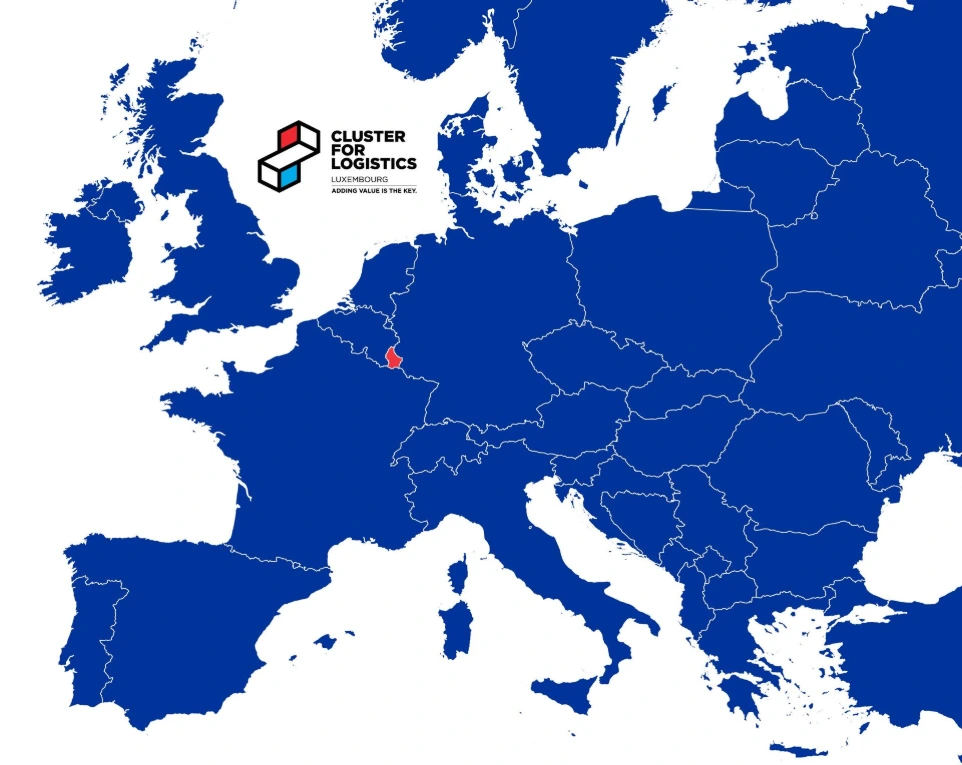
Luxembourg is exceptionally well positioned to benefit from the nearshoring trend. Located at the heart of Europe and connected to major industrial and consumer markets, the country offers an ideal platform for regional distribution, inventory management and multimodal logistics operations. [yourscp.com], [acrosslogistics.com]
Key advantages include:
- Central European location
- Multimodal transportation infrastructure
- Air cargo expertise
- Cross-border market access
- Political and economic stability
- Advanced digital logistics capabilities
As European companies continue to regionalize their supply chains, Luxembourg can strengthen its role as a strategic logistics gateway supporting resilient and agile European operations. [acrosslogistics.com], [logos3pl.com]
Executive Outlook
Nearshoring and reshoring are no longer temporary responses to disruption—they represent a long-term transformation of global supply chain strategy. While globalization will continue, future supply chains will be more regional, diversified and resilient.
Key Trends to Watch
✅ Regional manufacturing growth
✅ Multi-sourcing strategies
✅ Expansion of European logistics hubs
✅ Increased multimodal transport demand
✅ AI-enabled supply chain orchestration
✅ Sustainable and lower-carbon supply networks
✅ Greater investment in European industrial capacity
For logistics providers, manufacturers and supply chain leaders, nearshoring is creating new opportunities to build faster, more resilient and more sustainable supply chains across Europe.