Robotics
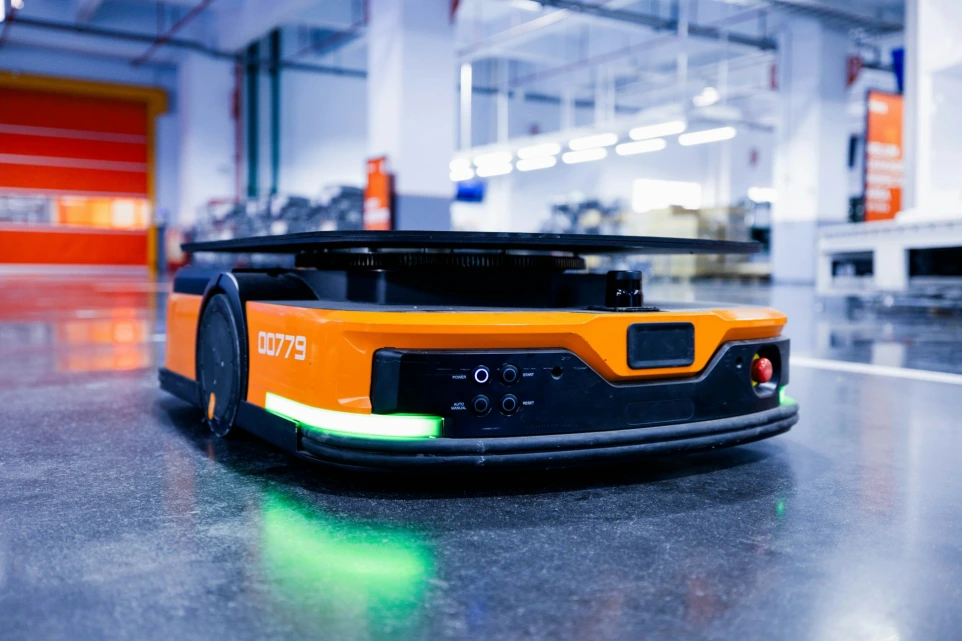
Understanding Robotics in Logistics
What is Robotics in Logistics?
Imagine a warehouse where robots move inventory autonomously, retrieve products from storage locations, assist employees with order picking, sort thousands of parcels per hour, and prepare shipments for delivery with exceptional speed and accuracy.
This is the reality of Robotics in Logistics.
Robotics in Logistics refers to the use of automated, programmable machines that perform physical logistics tasks with minimal human intervention. These robots are designed to improve operational efficiency, accuracy, safety, scalability, and productivity across warehouses, distribution centers, transportation hubs, and fulfillment operations.
As supply chains become more complex and customer expectations continue to rise, robotics is becoming a critical component of modern logistics operations.
"Robotics is transforming logistics from labor-intensive operations into intelligent, high-performance fulfillment networks."
Why Robotics Matters
The logistics industry faces increasing challenges:
- Labor shortages
- Rising operational costs
- Growing e-commerce demand
- Faster delivery expectations
- Capacity constraints
- Increasing accuracy requirements
Traditional manual processes often struggle to meet these challenges efficiently.
Robotics helps organizations:
✅ Increase productivity
✅ Improve accuracy
✅ Reduce costs
✅ Enhance safety
✅ Support business growth
✅ Improve customer service
✅ Enable 24/7 operations
The Role of Robotics in Logistics
Robots can support various logistics activities across the supply chain.
Inventory Handling
Moving products between storage and operational areas.
Warehouse Operations
Supporting picking, packing, sorting, and replenishment activities.
Transportation Support
Loading and unloading vehicles and containers.
Inventory Management
Performing inventory counts and stock verification.
Data Collection
Capturing operational information in real time.
Order Fulfillment
Helping accelerate customer order processing.
Types of Logistics Robots
1. Autonomous Mobile Robots (AMRs)
AMRs navigate warehouses independently using sensors, cameras, and AI-driven navigation systems.
Typical Tasks
- Transporting inventory
- Supporting order picking
- Replenishing stock
- Moving goods between workstations
Benefits
✅ Flexible deployment
✅ Improved productivity
✅ Reduced walking distances
✅ Enhanced worker efficiency
2. Automated Guided Vehicles (AGVs)
AGVs follow predefined routes using markers, tracks, or navigation systems.
Typical Tasks
- Pallet transportation
- Material movement
- Manufacturing support
- Warehouse replenishment
Benefits
✅ Predictable operations
✅ Reduced labor costs
✅ Improved material flow
3. Robotic Picking Systems
These robots use computer vision and AI to identify, pick, and place products.
Typical Tasks
- E-commerce fulfillment
- Piece picking
- Order preparation
Benefits
✅ Higher picking speed
✅ Improved accuracy
✅ Reduced manual handling
4. Automated Storage and Retrieval Systems (AS/RS)
AS/RS solutions automatically store and retrieve products from high-density storage systems.
Typical Tasks
- Inventory storage
- Goods retrieval
- Replenishment activities
Benefits
✅ Space optimization
✅ Increased inventory accuracy
✅ Faster retrieval times
5. Robotic Sorting Systems
Commonly used in parcel and e-commerce operations.
Typical Tasks
- Package sorting
- Destination assignment
- Shipment consolidation
Benefits
✅ High throughput
✅ Reduced processing time
✅ Improved order accuracy
6. Inventory Drones
Autonomous drones perform inventory audits inside warehouses.
Typical Tasks
- Stock counting
- Inventory verification
- Warehouse inspections
Benefits
✅ Faster inventory checks
✅ Reduced manual effort
✅ Improved inventory accuracy
7. Collaborative Robots (Cobots)
Cobots are designed to work safely alongside humans.
Typical Tasks
- Assisted picking
- Packaging support
- Material handling
Benefits
✅ Improved ergonomics
✅ Enhanced productivity
✅ Greater workforce efficiency
Why Organizations Invest in Robotics
Increased Productivity
Robots can operate continuously with minimal downtime.
Benefits
✅ Higher throughput
✅ Faster fulfillment
✅ Increased processing capacity
Improved Accuracy
Robots perform repetitive tasks with a high degree of precision.
Benefits
✅ Fewer picking errors
✅ Improved inventory accuracy
✅ Better customer satisfaction
Enhanced Safety
Robots can perform physically demanding or hazardous tasks.
Benefits
✅ Reduced workplace injuries
✅ Improved employee well-being
✅ Safer working environments
Lower Operating Costs
Although robots require investment, they often reduce long-term operating costs.
Benefits
✅ Reduced labor dependency
✅ Lower error-related costs
✅ Improved resource utilization
Better Scalability
Robotic systems help organizations manage growth and peak demand periods.
Benefits
✅ Faster expansion
✅ Improved flexibility
✅ Enhanced operational resilience
Key Applications of Robotics in Logistics
Goods-to-Person Fulfillment
Robots bring products directly to warehouse operators.
Benefits
✅ Reduced travel time
✅ Faster picking
✅ Improved productivity
Loading and Unloading
Robotic arms and mobile robots help unload containers and trailers.
Benefits
✅ Faster turnaround times
✅ Reduced physical strain
✅ Improved dock productivity
Inventory Management
Robots continuously monitor inventory movements and stock levels.
Benefits
✅ Real-time visibility
✅ Better inventory accuracy
✅ Faster audits
Parcel Sorting
High-speed robotic systems sort thousands of parcels per hour.
Benefits
✅ Increased throughput
✅ Reduced processing delays
✅ Improved service levels
E-Commerce Fulfillment
Many leading e-commerce companies use robotics extensively.
Benefits
✅ Faster order processing
✅ Same-day fulfillment capabilities
✅ Improved customer experience
Key Challenges of Robotics
While robotics offers significant opportunities, implementation comes with challenges.
1. High Initial Investment
Robotics solutions require investments in:
- Hardware
- Software
- Infrastructure
- Integration
Impact
- Longer payback periods
2. System Integration
Robots must integrate with:
- Warehouse Management Systems (WMS)
- ERP systems
- Transportation platforms
Impact
- Increased implementation complexity
3. Workforce Adaptation
Employees must learn to work alongside robotic systems.
Impact
- Training requirements
- Change management needs
4. Maintenance and Support
Robotic systems require ongoing maintenance.
Impact
- Downtime risks
- Technical support requirements
5. Operational Flexibility
Some robotic solutions are optimized for specific environments and processes.
Impact
- Limited adaptability
- Additional implementation planning
Robotics Best Practices
1. Start with High-Impact Processes
Focus on repetitive, labor-intensive activities.
Examples:
- Picking
- Sorting
- Transportation
- Replenishment
Benefits
✅ Faster ROI
✅ High productivity gains
2. Combine Robotics with Automation and AI
Robotics handles physical activities while AI improves decision-making.
Benefits
✅ Intelligent operations
✅ Better optimization
✅ Increased efficiency
3. Design for Human-Robot Collaboration
Robots should complement employees rather than replace them.
Benefits
✅ Improved productivity
✅ Better safety
✅ Stronger adoption
4. Measure Performance
Track clear performance indicators before and after implementation.
Benefits
✅ Visibility into ROI
✅ Continuous improvement
✅ Better resource planning
5. Invest in Workforce Training
Develop employee skills for managing and working alongside robotic systems.
Benefits
✅ Higher acceptance
✅ Greater productivity
✅ Improved operational performance
Robotics and Artificial Intelligence
Modern robotics is increasingly powered by AI.
- AI enables robots to:
- Learn from experience
- Recognize objects
- Optimize movements
- Avoid obstacles
- Adapt to changing environments
- Make autonomous decisions
Together, AI and robotics create Smart Logistics Operations capable of continuously improving performance.
"Automation performs tasks. Robotics performs physical work. Artificial Intelligence makes both smarter."
Future Trends in Logistics Robotics
Autonomous Warehouses
Facilities with minimal human intervention.
Autonomous Trucks
Self-driving vehicles supporting transportation operations.
Robotic Micro-Fulfillment Centers
Supporting ultra-fast urban deliveries.
Inventory Drones
Continuous inventory monitoring and inspection.
AI-Powered Robotics
Robots capable of learning and adapting in real time.
Logistics Control Towers
Coordinating fleets of robots across entire supply networks.
Sustainable Robotics
Energy-efficient robotic systems helping reduce operational waste.
Key Performance Indicators (KPIs)
Organizations measure robotics success using metrics such as:
| KPI | Purpose |
|---|---|
| Order Fulfillment Rate | Measures productivity |
| Picking Accuracy | Evaluates quality |
| Throughput per Hour | Measures processing capacity |
| Inventory Accuracy | Tracks stock reliability |
| Labor Productivity | Measures workforce efficiency |
| Cost per Order | Evaluates cost optimization |
| Robot Utilization Rate | Measures equipment effectiveness |
| Workplace Safety Incidents | Tracks safety improvements |
"The most successful logistics organizations are not replacing people with robots—they are creating powerful partnerships between humans, robotics, and AI."
Robotics in the Digital Supply Chain
The future supply chain will be increasingly:
✅ Automated
✅ Connected
✅ Intelligent
✅ Scalable
✅ Sustainable
✅ Data-driven
✅ Customer-centric
Robotics will play a central role in achieving faster fulfillment, higher service levels, greater resilience, and improved operational efficiency.
Key Takeaway
Robotics in Logistics is the use of intelligent machines and autonomous systems to automate physical logistics activities, improving productivity, accuracy, safety, and scalability throughout the supply chain.
Think About It
Every day, millions of products move through warehouses, transportation hubs, and distribution centers. Robotics helps move, sort, store, pick, and prepare those products faster and more accurately than ever before. Combined with AI and automation, robotics is becoming one of the most transformative technologies shaping the future of logistics and supply chain management.