Robotics
Robotics in Logistics in Luxembourg:
Revolutionizing the Movement of Goods
Introduction
The logistics industry is entering a new era
-one where robotics is transforming the way goods are stored, handled, transported, and delivered. Once considered a futuristic concept, robotics has become a strategic reality, helping logistics organizations improve efficiency, increase accuracy, address labor shortages, and enhance operational resilience.
For Luxembourg, a leading logistics hub at the heart of Europe, robotics represents an exciting opportunity to strengthen competitiveness, accelerate innovation, and support the continued evolution of smart supply chains.
As global trade becomes increasingly complex and customer expectations continue to rise, robotics is enabling logistics companies to move faster, operate smarter, and prepare for the challenges of tomorrow.
Why Robotics Matters in Logistics
Modern supply chains operate under increasing pressure to deliver more goods, more quickly, and with greater accuracy than ever before.
Robotics addresses these challenges by automating repetitive, labor-intensive, and time-critical tasks.
Key benefits include:
- Increased operational efficiency
- Enhanced productivity
- Improved accuracy and quality
- Reduced operational costs
- Greater workplace safety
- Improved scalability
- Faster order fulfillment
- Enhanced customer satisfaction
By complementing human expertise, robots enable logistics operations to perform around the clock while maintaining consistent levels of performance and reliability.
The Rise of Smart Warehouses
Warehouses are at the forefront of the robotics revolution.
Across the logistics industry, intelligent robotic systems are redefining traditional warehouse operations, transforming facilities into highly efficient and connected environments.
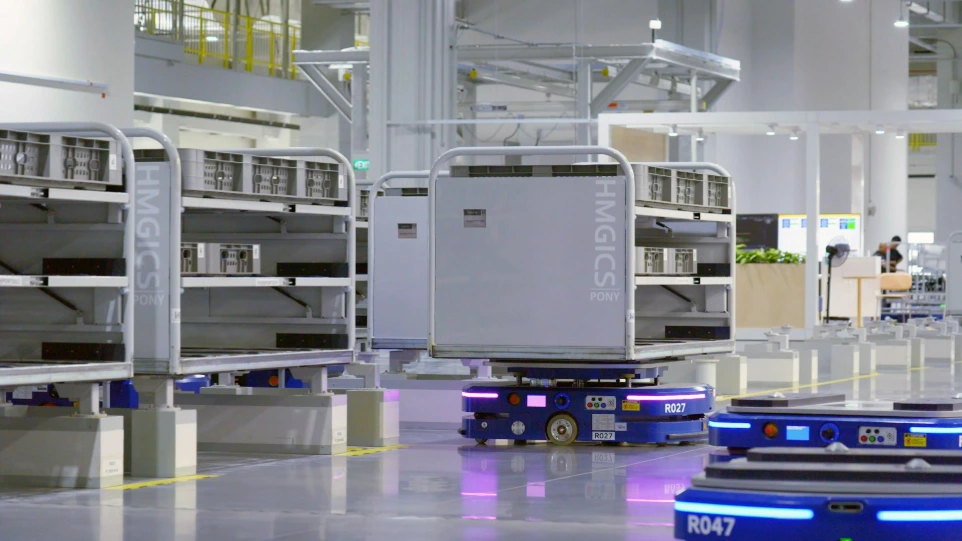
Autonomous Mobile Robots (AMRs)
AMRs navigate independently throughout warehouses, transporting goods between storage locations, picking areas, and shipping zones.
Unlike traditional automated systems, these robots can dynamically adapt to changing warehouse conditions while working safely alongside employees.
Benefits include:
- Faster internal movements
- Reduced travel time
- Improved operational flexibility
- Increased throughput
Robotic Picking Systems
Advances in machine vision and artificial intelligence have enabled robots to identify, select, and handle products with increasing precision.
These systems assist with:
- Order picking
- Sorting operations
- Packaging activities
- Inventory management
The result is faster processing times and improved order accuracy, particularly in high-volume distribution environments.
Automated Storage and Retrieval Systems
Robotic storage systems can automatically locate, retrieve, and place products within warehouses.
These solutions maximize storage density while minimizing unnecessary movements and handling errors.
For logistics operators facing increasing demand and limited space, automated storage systems can significantly improve capacity utilization.
Enhancing Human Performance
A common misconception is that robotics replaces human workers.
In reality, the most successful logistics environments combine human intelligence with robotic efficiency.
Robots excel at:
- Repetitive tasks
- Heavy lifting
- Continuous operations
- Precision handling
- Data-driven execution
Humans remain essential for:
- Strategic decision-making
- Innovation
- Customer service
- Complex problem-solving
- Process improvement
- Leadership and supervision
This collaborative approach
—often referred to as "cobotics" or collaborative robotics
—creates safer, more productive workplaces where technology supports people rather than replacing them.
Improving Workplace Safety
Safety remains a top priority across the logistics sector.
Warehouses and distribution centers often involve activities such as heavy lifting, repetitive movements, and continuous equipment operation.
Robotic systems help reduce workplace risks by:
- Handling heavy loads
- Performing repetitive tasks
- Operating in hazardous environments
- Reducing employee fatigue
- Supporting ergonomic working conditions
By minimizing exposure to physical strain and dangerous activities, robotics contributes to safer and healthier workplaces.
Robotics Beyond the Warehouse
The impact of robotics extends well beyond warehouse operations.
Across the broader logistics ecosystem, robotic technologies are supporting activities such as:
Autonomous Inspection
Robotic systems equipped with cameras and sensors can inspect infrastructure, equipment, and cargo with speed and precision.
Drone Technology
Unmanned aerial vehicles are increasingly used for:
- Inventory verification
- Facility inspections
- Security monitoring
- Infrastructure assessments
Port and Terminal Operations
Automated cranes, robotic handling equipment, and intelligent container management systems are improving efficiency in logistics terminals around the world.
As these technologies mature, they are expected to become increasingly relevant within multimodal logistics environments.
Supporting Sustainability Goals
Robotics also contributes to more sustainable logistics operations.
By optimizing workflows and eliminating inefficiencies, robotic systems help organizations reduce:
- Energy consumption
- Product damage
- Material waste
- Unnecessary transport movements
- Operational bottlenecks
Combined with digital technologies and automation platforms, robotics supports the development of more environmentally responsible supply chains.
For Luxembourg's ambitions in sustainable logistics, robotics can become an important enabler of greener operations.
Addressing Workforce Challenges
The logistics sector across Europe continues to face recruitment and workforce challenges.
Growing demand, demographic shifts, and changing skill requirements have increased pressure on organizations to find new ways to maintain operational capacity.
Robotics helps address these challenges by:
- Supporting workforce productivity
- Reducing labor-intensive tasks
- Improving operational flexibility
- Allowing employees to focus on higher-value activities
At the same time, new opportunities are emerging for skilled professionals in robotics management, maintenance, digital systems, and process optimization.
The future workforce will increasingly combine logistics expertise with digital and technological capabilities.
Luxembourg's Opportunity in Logistics Robotics
Luxembourg offers a highly favorable environment for robotics adoption.
The country benefits from:
- A strategic location in Europe
- Strong logistics infrastructure
- Advanced digital connectivity
- An innovation-driven economy
- Research and development expertise
- International logistics networks
As robotics technologies become more accessible and cost-effective, Luxembourg's logistics ecosystem is well positioned to accelerate their deployment and create new competitive advantages.
Through collaboration between logistics companies, technology providers, research institutions, startups, and public stakeholders, Luxembourg can establish itself as a leader in next-generation logistics operations.
Challenges to Consider
While the benefits are significant, successful robotics implementation requires careful planning.
Organizations must address:
- Investment costs
- Systems integration
- Workforce adaptation
- Cybersecurity requirements
- Training and skills development
- Operational change management
The most successful projects begin with clear business objectives and a long-term vision for transformation.
Robotics should be viewed not simply as a technology investment, but as part of a broader strategy to improve operational excellence and future readiness.
The Future of Robotics in Logistics
The next generation of logistics will be increasingly robotic, intelligent, and connected.
Future developments are expected to include:
- More sophisticated autonomous robots
- AI-powered robotic decision-making
- Collaborative human-robot teams
- Fully connected smart warehouses
- Autonomous transport solutions
- Advanced predictive maintenance systems
As robotics and artificial intelligence converge, logistics operations will become more adaptive, responsive, and efficient than ever before.
Organizations that embrace these technologies today will be best positioned to lead tomorrow's supply chains.
The Cluster for Logistics Perspective
At Cluster for Logistics Luxembourg, we see robotics as one of the key technologies shaping the future of logistics.
By fostering innovation, encouraging technology adoption, and supporting collaboration across the logistics ecosystem, Luxembourg can unlock the full potential of robotics to drive productivity, sustainability, and competitiveness.
Robotics is not merely about machines performing tasks. It is about creating smarter operations, empowering people, increasing resilience, and building a logistics sector ready for the opportunities of the future.
The future of logistics is not only automated
—it is robotic, intelligent, and collaborative. And Luxembourg is well positioned to be at the forefront of this transformation.