Automation
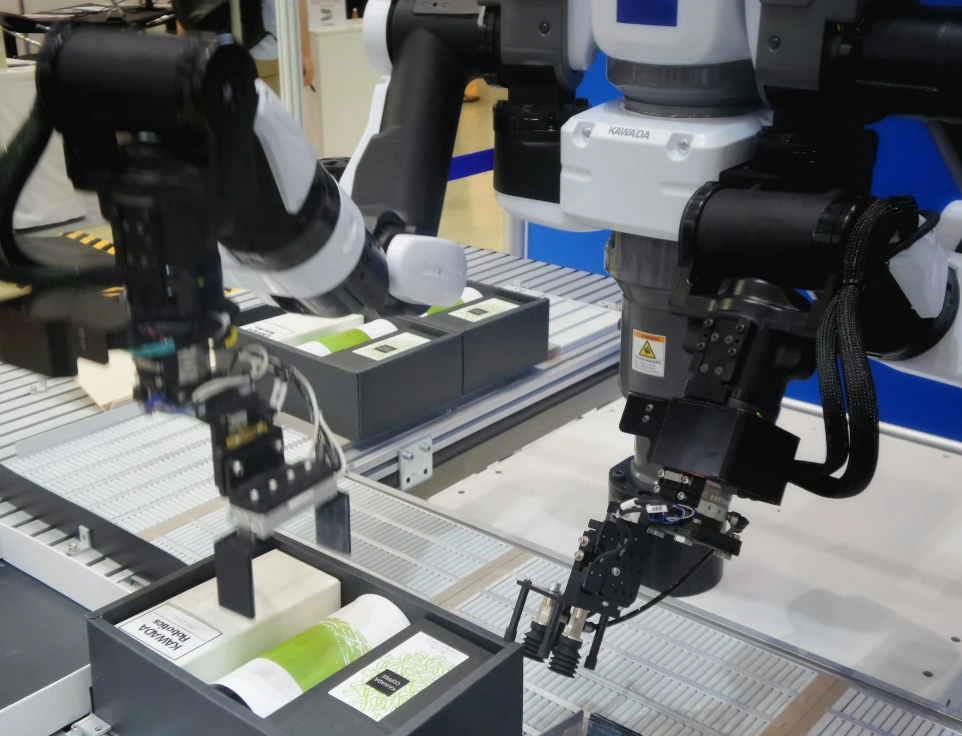
Automation in Logistics in Luxembourg:
Driving the Next Era of Efficiency and Competitiveness
Introduction
Automation is transforming the logistics industry at an unprecedented pace. Across the globe, companies are increasingly adopting automated technologies to improve efficiency, enhance accuracy, optimize resources, and respond to growing customer expectations.
For Luxembourg, a strategic logistics hub located at the heart of Europe, automation represents a key driver of competitiveness, innovation, and sustainable growth. As supply chains become more complex and demand for faster, more reliable services continues to rise, automation is helping logistics organizations streamline operations while preparing for the challenges of tomorrow.
From intelligent warehouses and autonomous equipment to automated data processing and smart transportation systems, automation is redefining how logistics operates across the Grand Duchy and beyond.
Why Automation Matters
The logistics sector faces constant pressure to move goods faster, more accurately, and at lower cost while maintaining high service levels.
Automation enables organizations to:
- Increase operational efficiency
- Improve productivity
- Reduce human errors
- Enhance safety
- Optimize resource utilization
- Lower operating costs
- Increase scalability
- Improve customer satisfaction
By automating repetitive and time-consuming processes, logistics professionals can focus on higher-value activities such as customer engagement, strategic planning, and innovation.
The Evolution of Logistics Operations
Traditionally, logistics operations depended heavily on manual processes. Warehouses relied on paper-based systems, inventory counts were performed manually, and transportation planning often required significant human intervention.
Today, automation is reshaping every aspect of the supply chain.
Advanced technologies now support:
- Automated order processing
- Real-time inventory management
- Smart warehouse operations
- Automated customs procedures
- Digital documentation workflows
- Intelligent transportation planning
- Predictive maintenance systems
These innovations are allowing organizations to achieve greater speed, precision, and operational visibility.
Smart Warehousing: The Backbone of Modern Logistics
Warehouses are among the areas experiencing the most significant automation transformation.
Modern automated warehouses leverage technology to improve efficiency across every stage of operations.
Automated Storage and Retrieval Systems (AS/RS)
Automated systems can store and retrieve products quickly and accurately, maximizing storage capacity while reducing handling time.
Robotics and Autonomous Mobile Robots (AMRs)
Robots can transport goods, assist with picking operations, and support warehouse staff in repetitive tasks, increasing productivity and reducing physical strain.
Automated Sorting Systems
High-speed sorting technologies accelerate order fulfillment and improve accuracy in distribution operations.
Real-Time Inventory Control
Automated inventory systems provide continuous visibility into stock levels, minimizing shortages and improving planning accuracy.
These capabilities enable businesses to meet increasingly demanding customer expectations while maintaining operational excellence.
Enhancing Workforce Productivity
Contrary to common misconceptions, automation is not about replacing people
—it is about empowering them.
Automation eliminates repetitive, labor-intensive activities and allows employees to focus on tasks that require expertise, judgment, creativity, and customer interaction.
Benefits for employees include:
- Reduced manual workload
- Improved workplace safety
- Better working conditions
- Greater focus on value-added activities
- Access to new skills and career opportunities
As automation technologies become more widespread, workforce development and continuous learning are becoming increasingly important components of logistics success.
Automation and Transportation Efficiency
Transportation remains one of the most complex and costly elements of supply chain management.
Automation supports transportation operations by improving:
Route Optimization
Automated systems continuously analyze traffic conditions, delivery requirements, vehicle capacity, and customer schedules to identify the most efficient routes.
Fleet Management
Digital solutions monitor vehicle performance, maintenance requirements, and fuel consumption in real time.
Digital Documentation
Automated processing of transport documents reduces administrative burden and accelerates shipment movements.
Visibility and Tracking
Automated tracking systems provide real-time updates on shipment status, improving customer communication and operational control.
Together, these technologies contribute to more efficient, reliable, and sustainable transportation networks.
Supporting Sustainability Through Automation
Sustainability has become a strategic priority for logistics organizations worldwide.
Automation plays a critical role in helping companies achieve environmental objectives by enabling:
- Better route planning
- Reduced fuel consumption
- Lower energy usage
- Improved asset utilization
- Reduced waste
- More efficient warehouse operations
By optimizing processes and minimizing inefficiencies, automation supports both economic performance and environmental responsibility.
For Luxembourg, where sustainable logistics is a growing priority, automation offers a pathway toward greener and more resilient supply chains.
Digital Automation and Administrative Excellence
Automation extends far beyond physical operations.
Digital process automation is helping organizations simplify administrative workflows and improve business performance.
Examples include:
- Automated invoicing
- Electronic proof of delivery
- Customs and compliance management
- Procurement workflows
- Customer service processes
- Data management and reporting
These capabilities reduce processing times, improve accuracy, and enable faster decision-making.
As supply chains become increasingly data-driven, digital automation will continue to play a central role in organizational success.
Luxembourg's Strategic Advantage
Luxembourg is uniquely positioned to benefit from automation-driven logistics innovation.
The country combines:
- A central European location
- Excellent multimodal connectivity
- Advanced digital infrastructure
- Strong innovation ecosystems
- International business expertise
- Supportive public-private collaboration
These strengths create an ideal environment for the adoption and development of automated logistics solutions.
As automation technologies continue to evolve, Luxembourg's logistics ecosystem has the opportunity to strengthen its role as a leader in smart and efficient supply chain operations.
Challenges on the Road to Automation
Successful automation requires more than technology investment.
Organizations must also address:
- Integration with existing systems
- Workforce training and reskilling
- Change management
- Data quality and governance
- Cybersecurity considerations
- Return-on-investment evaluation
The most successful automation projects balance technological innovation with strong leadership, employee engagement, and clear strategic objectives.
Building the Automated Logistics Ecosystem of Tomorrow
The future of logistics will be increasingly automated, connected, and intelligent.
Companies that embrace automation today will be better positioned to:
- Adapt to market changes
- Improve operational performance
- Increase resilience
- Enhance customer experiences
- Achieve sustainability goals
- Remain competitive in an evolving global marketplace
Automation is no longer a luxury or a future ambition
—it is becoming a fundamental pillar of modern logistics excellence.
The Cluster for Logistics Perspective
At Cluster for Logistics Luxembourg, we see automation as a powerful enabler of innovation, growth, and long-term competitiveness.
By encouraging the adoption of advanced technologies, facilitating knowledge sharing, and fostering collaboration between industry stakeholders, Luxembourg's logistics community can continue to lead the transformation of supply chains across Europe.
Automation is not simply about faster processes or reduced costs. It is about creating smarter operations, empowering people, strengthening resilience, and building a logistics sector that is ready for the future.
The future of logistics is automated, connected, and efficient
—and Luxembourg is ideally positioned to help shape that future.